

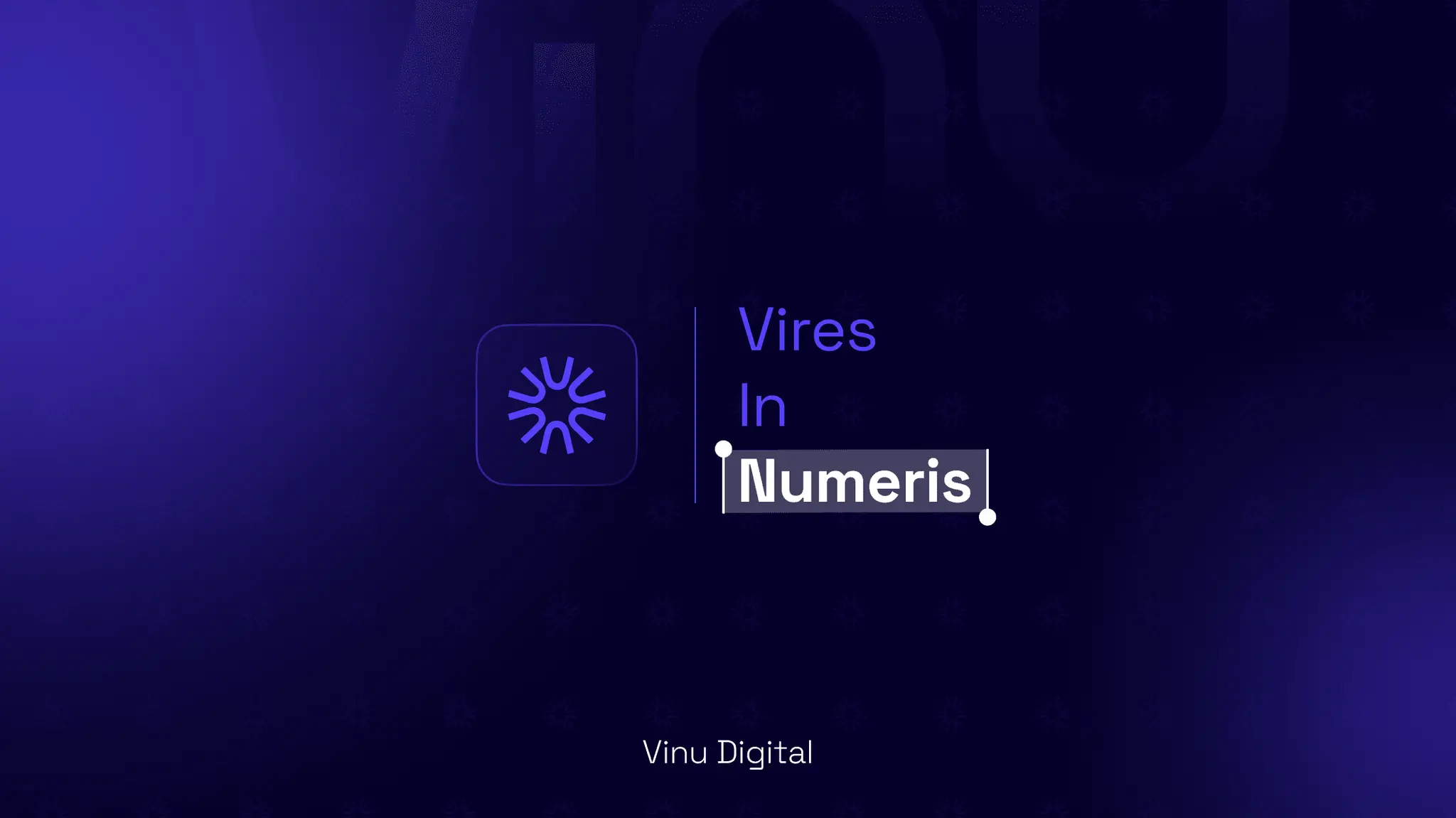
“Vires in Numeris,” the Latin expression Vinu Digital interprets as “Power in Numbers,” represents a fundamental idea behind blockchain technology: trust can be supported by cryptography, transparent rules, and distributed network participation rather than relying exclusively on centralized authorities.
The expression reflects both the technical foundations of cryptocurrency and Vinu Digital's philosophy of building reliable, accessible, and user-oriented digital infrastructure.
From Bitcoin's introduction of peer-to-peer electronic transactions to today's decentralized applications, the principle remains relevant: technology can distribute certain forms of control while enabling participants to verify how a system operates.
The Power in Numbers: The Meaning Behind Vires in Numeris
Vires in Numeris is closely associated with the philosophy that emerged around Bitcoin and decentralized digital currencies.
Traditional financial systems rely heavily on banks, payment institutions, and other intermediaries to maintain records, authorize transactions, and coordinate the movement of value.
Bitcoin introduced a different model. Its network allows participants to verify transactions through shared protocol rules, digital signatures, and a distributed consensus mechanism.
Instead of depending entirely on one institution to maintain the transaction history, participating nodes can independently check whether transactions follow the network's rules.
This shift does not remove every form of trust or operational responsibility. It changes where trust is placed and how information can be verified.
For Vinu Digital, the concept expresses a commitment to technology built around transparency, accountability, and the collective strength of interconnected systems.
How Does Blockchain Create Mathematical Trust?
Blockchain technology combines cryptographic techniques, transaction validation, and distributed records to support verifiable digital transactions.
A blockchain maintains a sequence of records linked through cryptographic methods. Network participants follow agreed rules to determine which transactions are valid and how they become part of the shared history.
Different blockchain networks use different consensus mechanisms.
In Bitcoin, miners participate in proof-of-work consensus by contributing computational resources. Full nodes independently validate transactions and blocks against protocol rules.
Other blockchain networks, including Ethereum, use proof-of-stake systems in which validators participate in proposing and confirming blocks according to network-specific requirements.
Users also contribute to the ecosystem by operating wallets, submitting transactions, developing applications, and participating in governance where supported.
These roles illustrate the collective nature of blockchain infrastructure.
However, mathematical verification does not make a system immune to attacks, software vulnerabilities, or governance disputes. Security depends on protocol design, network participation, implementation quality, and operational controls.
Why Decentralization Matters for Digital Freedom
Decentralization distributes selected responsibilities across multiple participants rather than concentrating them within a single organization.
In financial applications, this can enable direct transfers between compatible wallets without requiring a conventional bank to approve every blockchain transaction.
In other applications, decentralization can support shared records, programmable agreements, and services that operate according to publicly inspectable rules.
Potential benefits include greater transaction transparency, reduced dependence on individual service providers, and more flexibility in managing digital assets.
Nevertheless, these outcomes vary by network and application.
Transaction fees and confirmation times depend on network conditions. Some applications depend on centralized interfaces, data providers, or administrators. Users also remain responsible for protecting private keys when using self-custodial wallets.
Decentralization is therefore not an automatic guarantee of financial freedom. It is a technical model that can provide additional choices when implemented responsibly.
Blockchain Beyond Cryptocurrency
Although blockchain became widely known through Bitcoin, its applications extend beyond digital currencies.
Decentralized Finance
DeFi applications use smart contracts to coordinate financial operations such as token transfers, lending, staking, and decentralized trading.
These systems can make selected processes programmable and reduce reliance on traditional intermediaries. They also introduce smart contract, liquidity, oracle, and governance risks that require careful management.
Web3 Applications and Digital Ownership
Web3 applications combine blockchain networks, wallets, and smart contracts to support new ways of interacting with digital assets.
NFTs, decentralized governance systems, and token-based applications are examples of how digital ownership and participation can be represented through programmable infrastructure.
The rights associated with an asset still depend on its technical design and applicable legal arrangements.
Enterprise Blockchain Integration
Businesses can also use blockchain technologies for asset tracking, shared transaction records, tokenization, and coordinated processes involving multiple organizations.
Successful enterprise integration requires compatibility with existing software, reliable data, secure permissions, and clearly defined operational responsibilities.
These examples show how the principles represented by Vires in Numeris can extend into different areas of the digital economy.
Vinu Digital's Philosophy: Decentralization, Trust, and Freedom
The Vinu name reflects our connection to the values of decentralization, numerical precision, and trust.
For Vinu Digital, these principles are not simply abstract ideals. They influence how we approach blockchain architecture, software development, and long-term technology partnerships.
We believe digital infrastructure should provide organizations and users with clearer visibility into transactions, better-defined control mechanisms, and systems designed around their actual needs.
This does not mean that every application should be fully decentralized.
Some businesses require managed services, permissioned environments, regulated operations, or established administrative controls.
The objective is to select an architecture that balances transparency, security, operational efficiency, and appropriate levels of control.
By approaching decentralization as a design consideration rather than a universal requirement, we can develop technology that serves practical business needs while preserving the values behind blockchain innovation.
Building Trust Through Security and Transparency
Trustworthy blockchain infrastructure requires more than cryptographic algorithms.
Secure systems also depend on access management, responsible key storage, reliable software, transparent transaction records, and effective incident response procedures.
For example, a smart contract may execute according to predefined rules, but errors in those rules can still create vulnerabilities.
Similarly, a digital asset platform may use a decentralized network while relying on centralized components for customer support, account management, or custody.
Organizations must understand these dependencies and establish appropriate controls.
At Vinu Digital, security-conscious development involves examining technical architecture, system integrations, permissions, transaction workflows, and ongoing operational requirements.
Independent security assessments can complement internal testing when appropriate.
This engineering approach reflects an important part of our philosophy: confidence should come from verifiable systems and responsible practices, not unsupported promises.
From Decentralized Ideals to Working Infrastructure
A decentralized vision becomes useful when it can be translated into dependable applications.
Vinu Digital develops infrastructure across cryptocurrency exchanges, decentralized finance, Web3 applications, blockchain integrations, and cloud environments.
Our work includes smart contract development, wallet connectivity, multi-network integrations, configurable software modules, and supporting backend services.
Cloud consulting and infrastructure engineering also play an important role. Even applications built on decentralized networks need reliable connections, monitoring, deployment processes, and maintenance.
Our goal is to help organizations adopt appropriate blockchain capabilities without overlooking the operational systems required to support them.
In this context, Vires in Numeris connects the philosophy of distributed trust with the engineering discipline needed to make blockchain services usable.
Can Decentralization Improve Digital Accessibility?
Decentralized technologies may expand participation by reducing selected intermediary requirements and enabling applications that operate across geographical boundaries.
However, accessibility also depends on internet connectivity, user experience, transaction costs, technical knowledge, and local legal requirements.
A technically decentralized product may remain difficult to use if wallet creation, transaction fees, or security responsibilities are too complex.
For this reason, accessible digital infrastructure requires thoughtful interface design, understandable transactions, and suitable security mechanisms.
The broader objective is not decentralization for its own sake, but technology that can give more participants meaningful opportunities to interact with digital services.
Frequently Asked Questions
What does Vires in Numeris mean?
Vires in Numeris is a Latin expression associated with the idea of strength or power in numbers. Vinu Digital uses “Power in Numbers” to express its commitment to mathematical verification, distributed participation, and blockchain innovation.
How does blockchain support trust without a central authority?
Blockchain networks use cryptography, shared rules, and consensus mechanisms to validate transactions. Participants can verify records independently, although security still depends on the network's design and implementation.
Does decentralization eliminate intermediaries?
Not entirely. Some blockchain transactions can occur without conventional financial intermediaries, but applications may still depend on service providers, infrastructure operators, and administrative systems.
How does Vinu Digital apply this philosophy?
Vinu Digital develops blockchain and Web3 software designed around transparent workflows, security-conscious architecture, modular integrations, and the operational needs of each project.
Building a Decentralized Future with Vinu Digital
Vires in Numeris represents more than an expression associated with cryptocurrency. It reflects a belief that shared rules, cryptographic verification, and collective participation can support new approaches to digital infrastructure.
At Vinu Digital, we aim to translate that philosophy into practical technology through blockchain development, decentralized applications, and reliable systems for organizations entering the digital asset ecosystem.
We believe the future of blockchain will be shaped not only by decentralization itself, but by the quality, accessibility, and responsibility of the systems built around it.
Discover how Vinu Digital can support your blockchain or Web3 project, and explore what the power in numbers can make possible.